Ant Legion: For The Swarm
37GAMESStrategy
4.66.83K Reviews
- Version
- 7.1.199
- Installs
- 10.00M
- Age Rating
- Everyone 10+
Screenshots
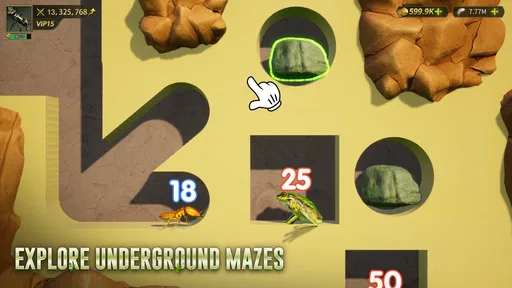
Our Review of Ant Legion: For The Swarm
 Analysis by Appyee
When I look at a strategy game, I want to know what it asks me to do first, how it shows that I’m getting somewhere, and whether its demands fit around ordinary life. Ant Legion: For The Swarm puts those questions into a colony setting: the basic appeal is to build, gather, and make decisions for a growing group of ants. Its mutation-adventure framing gives that familiar strategy loop a distinct theme, though the appeal depends more on enjoying steady management than on expecting a tightly plotted adventure.
Small goals make the opening approachable
The first stretch is about learning the colony’s basic needs. The tutorial introduces gathering resources, growing the population, and dealing with threats, so I can start making choices without needing to understand every part of the strategy genre in advance. That gradual introduction is useful if you have played mobile strategy games only casually; it gives you a practical reason to learn each action rather than dropping you into a complicated board of menus.
I’d treat the early tasks as a way to discover what the game expects from me, not as a race to build everything immediately. In a colony game, resources and population are connected: expanding can feel satisfying, but development also means keeping enough capacity to support what I have already started. A useful habit is to check what the current objective needs before spending materials elsewhere. That simple pause can make early progress feel more deliberate and reduce the frustration of discovering that a planned upgrade has to wait.
The ant theme helps those modest goals feel more specific than generic base management. I’m not just thinking about an abstract settlement; I’m directing workers and considering how different ants fit into the colony. If the idea of watching a small society grow is appealing, the premise gives routine resource tasks a clear identity. If you mainly want a story-led adventure with frequent narrative turns, this is a different sort of experience: the interest lies in managing the swarm and responding to its needs.
Progress is easiest to read through choices
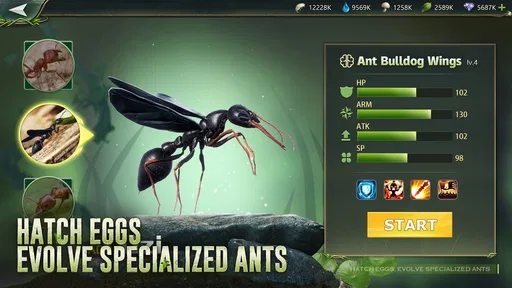
A satisfying strategy game needs more than a growing number on a screen; it needs to make new decisions matter. Here, progress comes from developing the colony and working out how to use different ants. Workers suit gathering, while soldiers have a defensive role, so the player’s choices are tied to practical jobs rather than being purely decorative. I find that distinction helpful because it gives me a reason to think about the makeup of my force instead of treating every ant as interchangeable.
That also creates a small planning opportunity that is easy to overlook: before committing to a task, consider whether the colony needs more collection capacity or stronger protection. A choice that helps one area may leave another feeling underprepared. I would avoid spending automatically just because a button is available; first ask what is holding back the next step. This approach is especially useful when I only have a few minutes to play and want each session to move toward a specific goal.
The game is free to download, and its Android release has reached over ten million installs, with an average rating of 4.6 from around 123,000 ratings. Those figures suggest a sizable audience, but they don’t tell me whether its pacing will suit a particular player. I would focus instead on whether I enjoy gradual management, making trade-offs, and returning to a colony as it develops. It is rated Everyone 10+, and the developer is 37GAMES.
Pressure rises when survival and growth compete
As the challenge grows, keeping the colony moving becomes a balancing act. Resources that could support expansion may also be needed to maintain strength, and an expanding set of threats makes preparation more important. I like that this gives decisions a consequence: building for growth is not always the same as preparing for a fight. A sensible approach is to look at the next challenge before committing every available resource to long-term development.
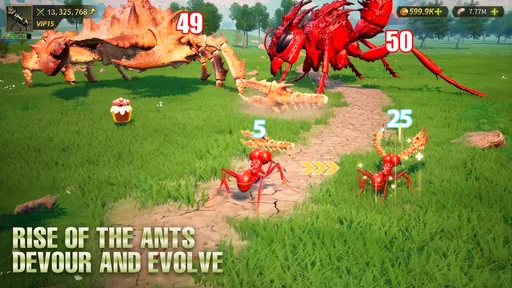
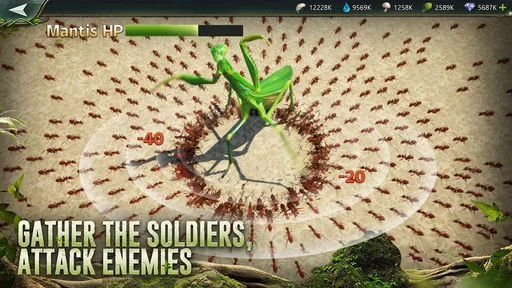
Combat provides a change of pace from gathering and colony management, but it still asks for strategic attention. The game’s insect conflicts and bosses give the player reasons to consider which ants to deploy and how to prepare. I would not expect every encounter to feel equally demanding; the useful question is whether I’m willing to adjust my approach as the stakes rise. If I prefer action games where success depends mainly on quick inputs, a strategy-focused battle may feel less immediate than I want.
The challenge curve is most appealing to players who enjoy planning around limits. It can be less comfortable for someone who wants every session to produce a large, visible breakthrough. Some stretches in a management game naturally feel like maintenance: keeping the colony supplied, choosing a priority, and waiting for the next meaningful decision. When that rhythm works, smaller gains make the colony feel earned. When it doesn’t, the same routine can feel like a chore.
Welcome to the Ant Empire
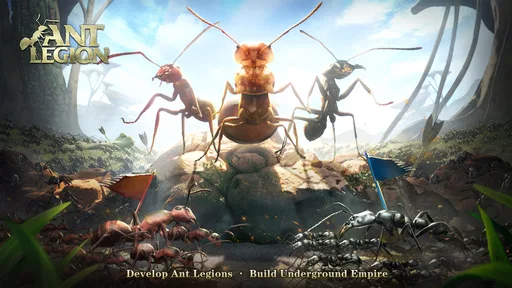
From the moment you fire up Ant Legion: For The Swarm, you're thrust into the role of an ant commander. The game does an excellent job of immersing you in its tiny world, allowing you to build and expand your very own ant colony. The visuals are surprisingly detailed, and watching your little ant workers scuttle around is strangely satisfying.
What struck me immediately was how the game balances complexity with accessibility. Even if you're not a seasoned gamer, the intuitive interface makes it easy to get into the swing of things. The tutorial guides you through the initial stages, teaching you how to gather resources, increase your ant population, and fend off enemies.
Building Your Colony
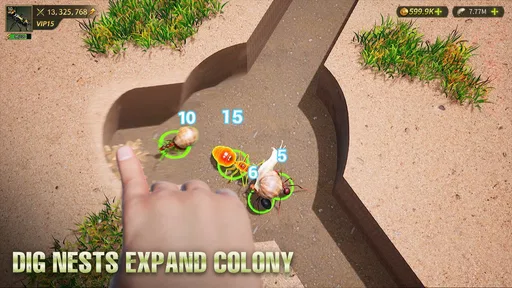
One of the core aspects of the game is resource management. You'll need to gather food and other materials to keep your colony thriving. It's a bit like city-building games, but with a unique twist. The game keeps you on your toes as you need to strategize efficiently to ensure your colony's survival.
What I found particularly engaging is the variety of ants you can breed and deploy. Each type of ant has its own strengths and weaknesses, and figuring out the best combinations for different tasks is part of the fun. Whether you’re sending worker ants to gather food or soldier ants to defend the colony, the choices you make have a direct impact on your success.
Battle for Survival
No ant colony would be complete without the occasional turf war. Ant Legion keeps things interesting by introducing other insect factions that you have to battle. The combat mechanics are straightforward yet thrilling, and the stakes are high. Every decision matters, and the game does a great job of conveying the urgency of protecting your swarm.
As you progress, the challenges become more intense, requiring you to think strategically about how to allocate your resources and troops. The game also introduces various bosses, each with unique abilities, ensuring that no two battles are ever the same.
Community and Multiplayer Features
One of the features that keeps me coming back is the game's multiplayer aspect. Joining alliances with other players adds a layer of depth and interaction that single-player modes often lack. It's exciting to strategize with others, share resources, and take on massive threats as a team.
The community within the game is active and engaging. There are plenty of forums and chat rooms where players can share tips, strategies, and even a few laughs. It's a great way to make the game feel like a shared experience rather than a solitary one.
Keeping the routine manageable
For an everyday play pattern, I’d fit the game into short check-ins rather than assume I need a long uninterrupted session. For example, I might open it during a quiet break, see what the colony needs next, collect or direct resources, and leave with one clear priority in mind. Later, I can decide whether I have time for a more involved strategic choice. The benefit of this approach is that it keeps the management readable; the drawback is that players who want a complete beginning-to-end match each time may find the ongoing colony format less satisfying.
There is also a practical difference between “progress” and “activity.” Tapping through available tasks can keep me busy without necessarily helping the colony’s most important need. I get more value by choosing a bottleneck first: if growth is stalled, focus on what supports it; if a threat is the concern, avoid treating expansion as the only measure of success. That is a general planning method rather than a claim about a hidden mechanic, and it helps make limited playtime feel purposeful.
How it compares with other strategy games
Compared with a puzzle strategy game, where each level tends to offer a self-contained problem and a clear finish, this colony approach puts more emphasis on ongoing development. Compared with a traditional city builder, the ant roles and the pressure of defending a swarm give the management a more creature-centered identity. That difference is the main reason I’d choose it over a more conventional settlement game: I like having the workers and soldiers feel connected to the colony’s needs.
The trade-off is that players seeking a campaign built around discrete missions, quick tactical matches, or a story that carries every session may prefer another kind of strategy game. Here, the appeal is the combination of gradual growth and preparation. Before installing, I’d ask myself whether I enjoy returning to a project over time. If I do, the colony can provide a satisfying thread between sessions; if I want a game that feels complete after a brief play, a puzzle-based alternative may be a better fit.
Spending, updates, and choosing your pace
The game is free, but it includes optional in-app purchases priced from $0.99 to $199.99 per item. That wide range is worth knowing before I start: I can approach it as a free game, but I should also be comfortable seeing paid options in the experience. I’d decide my own spending limit in advance and judge progress by the choices I make, rather than assuming a purchase is necessary whenever something takes time. Players who dislike in-app purchase prompts or prefer a one-time purchase with no ongoing store presence may be happier with a premium strategy title.
The current version is 7.1.187, and the game requires Android 7.0 or later. It first arrived on May 6, 2022, so this is an established release rather than a newly launched experiment. Those details are useful when checking compatibility, but they don’t determine whether the game is right for me: device fit is one question, while tolerance for a persistent progression loop is another. On iOS, I’d check the requirements shown for my device before downloading.
Another question I’d consider is whether the multiplayer element suits my habits. Alliances can make strategic play feel social and give group coordination a role, but they also make the experience less solitary than a puzzle game or offline builder. If I enjoy comparing plans and cooperating with other players, that can be a reason to stay. If I want to pause without feeling connected to a group’s activity, I’d lean toward a self-contained single-player option instead.
Community and Multiplayer Features
One of the features that keeps me coming back is the game's multiplayer aspect. Joining alliances with other players adds a layer of depth and interaction that single-player modes often lack. It's exciting to strategize with others, share resources, and take on massive threats as a team.
The community within the game is active and engaging. There are plenty of forums and chat rooms where players can share tips, strategies, and even a few laughs. It's a great way to make the game feel like a shared experience rather than a solitary one.
Final Thoughts
Overall, Ant Legion: For The Swarm is a delightful mix of strategy, resource management, and real-time combat. It’s not just a game; it’s a journey into the fascinating world of ants. Whether you’re new to this genre or a seasoned strategist, there’s something here for everyone.
If you’re looking for a game that’s both challenging and rewarding, give this one a try. You might just find yourself spending hours engrossed in the tiny yet vast world of ants. So, ready to join the swarm?
My progression verdict
I’d recommend it most to players who like a colony they can shape gradually, enjoy assigning different roles to ants, and don’t mind balancing growth against defense. The early tutorial makes the basic loop approachable, while the later pressure gives resource choices more weight. The strongest reason to stick around is that the ants’ jobs make planning feel tied to the theme rather than pasted onto a generic base.
I’d skip it if I wanted short, self-contained levels, a purely offline-feeling experience, or a strategy game with no optional purchases. Its management rhythm asks for patience, and its multiplayer layer may not suit someone who prefers to play entirely alone. For me, those are meaningful caveats, not deal-breakers: the game is most enjoyable when I treat each visit as a chance to make one considered improvement, not as a demand to optimize everything at once.
As a strategy game from 37GAMES, it has earned a 4.6 average from over 123,000 ratings and passed ten million installs. I’d use that popularity as a reason to consider it, not as a promise that every player will love its pace. With a free starting point and an Everyone 10+ rating, it is easy to try if the colony premise sounds appealing. My honest recommendation is to give it a chance if you like slow-burn management and cooperative strategy, while choosing a more compact game if you want a clean finish in every session.
Verdict
Strengths of Ant Legion: For The Swarm
- Engaging gameplay with strategic depth.
- High-quality graphics and animations.
- Frequent updates and events.
- Active community and support.
- Free-to-play with optional purchases.
Limitations of Ant Legion: For The Swarm
- Requires a stable internet connection.
- Can be time-consuming for progression.
- In-app purchases can be costly.
- Occasional bugs and glitches.
- Ads can be intrusive at times.
Other Releases by 37GAMES
View All
Puzzles & Survival
Strategy4.5

Puzzles & Chaos: Frozen Castle
Strategy4.1

Puzzles & Conquest
Role Playing4.7

Primal Conquest: Dino Era
Strategy3.4
Similar Picks in This Category
View All
Clash of Clans
Supercell4.5

Plants vs. Zombies™
ELECTRONIC ARTS3.7

Lords Mobile: Kingdom Wars
IGG.COM4.5

Clash Royale
Supercell4.4

State.io — Conquer the World
CASUAL AZUR GAMES4.1

Car Driving School : Car Games
Spark Game Studios3.9
Frequently Asked Questions
What is the main objective of Ant Legion: For The Swarm?
Ant Legion: For The Swarm is a strategy game where players manage an ant colony. The main objective is to expand your colony, gather resources, and defend against enemies. Players must strategically manage their ants to ensure the survival and growth of the colony while exploring new territories.
Is Ant Legion: For The Swarm free to play?
Yes, Ant Legion: For The Swarm is available as a free-to-play game. However, it offers in-app purchases that can enhance the gaming experience. These purchases are optional and include items that can accelerate progress or provide cosmetic enhancements.
What are the system requirements for Ant Legion: For The Swarm?
Ant Legion: For The Swarm requires Android 5.0 or iOS 10.0 and above. The game is optimized to run on a wide range of devices, but for the best experience, a device with at least 2GB of RAM and a stable internet connection is recommended.
Can I play Ant Legion: For The Swarm offline?
No, Ant Legion: For The Swarm requires an internet connection to play. The game features online interactions, including leaderboards and events, which necessitate a stable connection. This allows for a dynamic and interactive gaming experience with other players globally.
Are there any social features in Ant Legion: For The Swarm?
Yes, Ant Legion: For The Swarm incorporates various social features. Players can join alliances, participate in cooperative events, and compete in leaderboards. These features encourage collaboration and competition, enhancing the community aspect of the game.
Play our best games!


